


Aktuelle News & Schlagzeilen
Over 450 Robe moving lights specified for “AIG 100” event
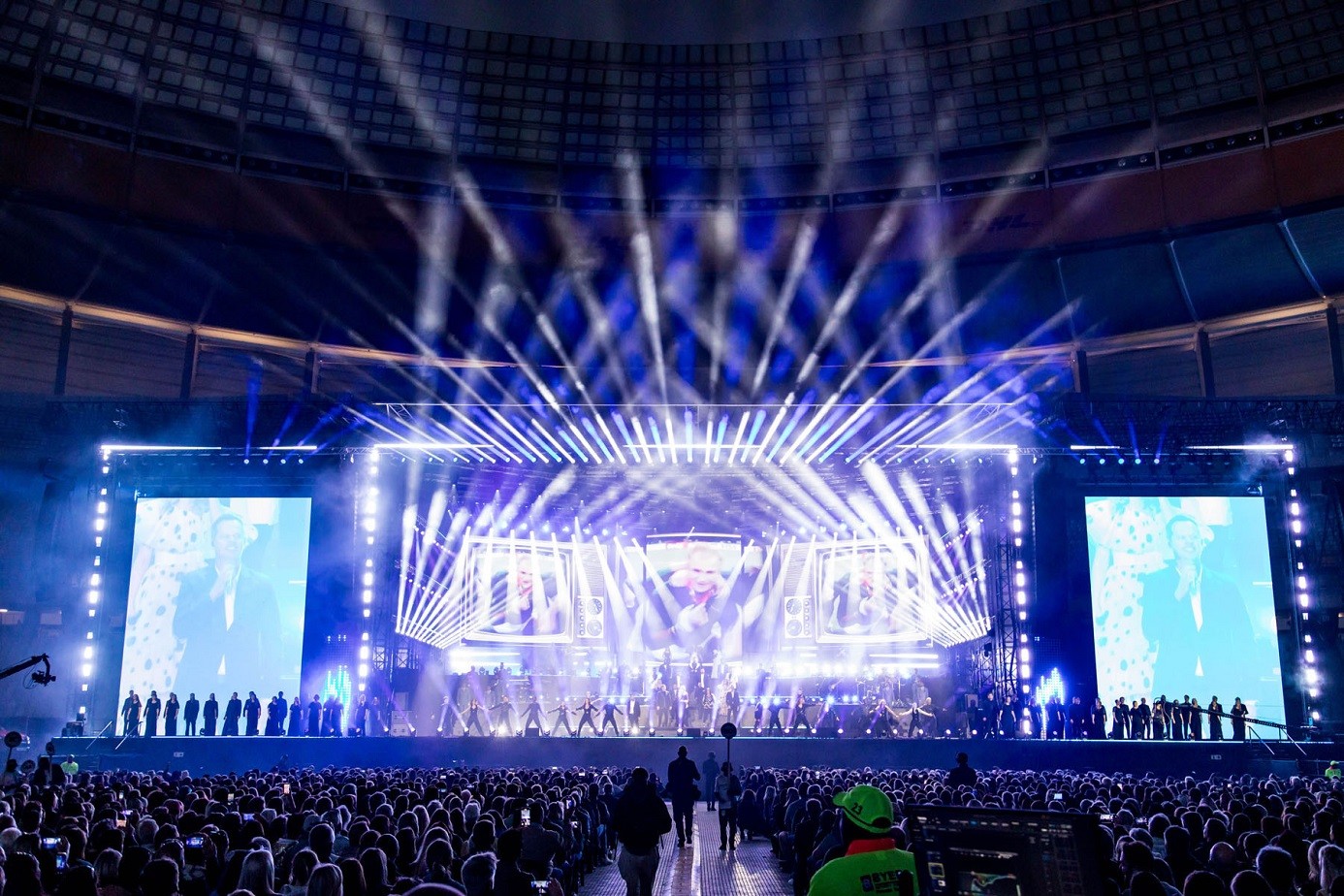
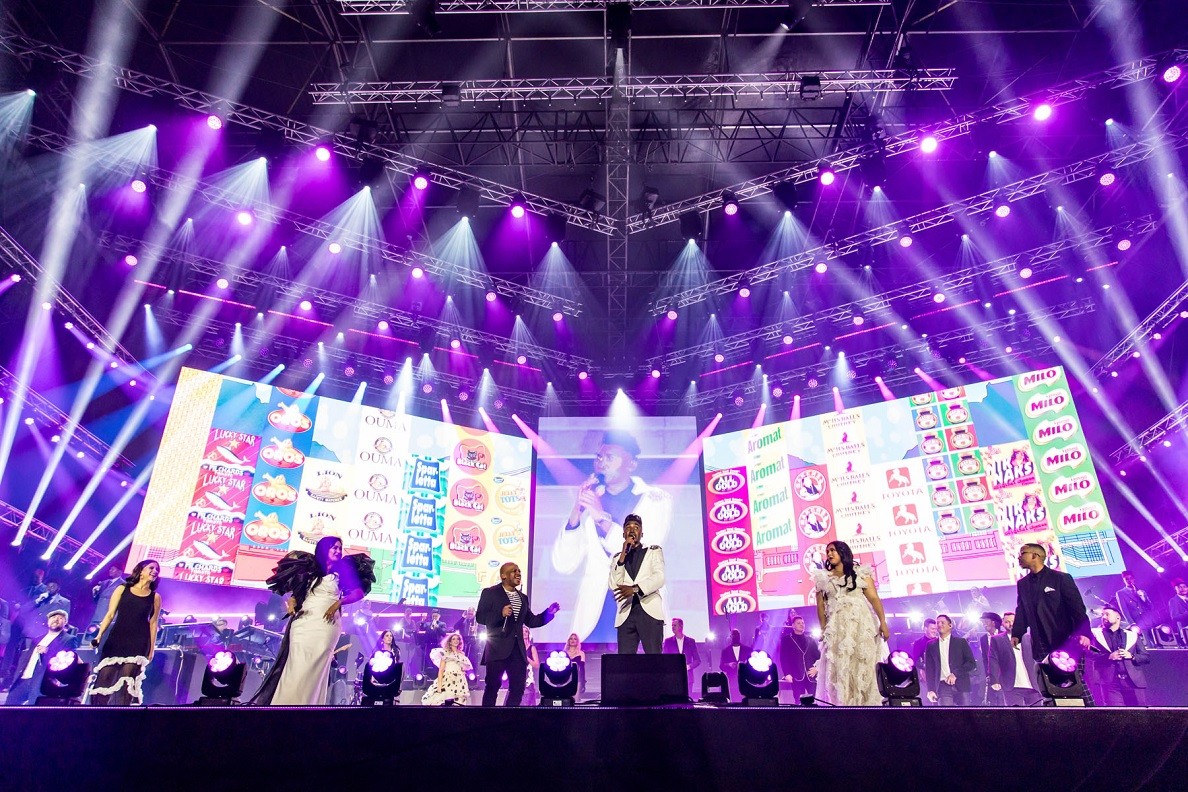
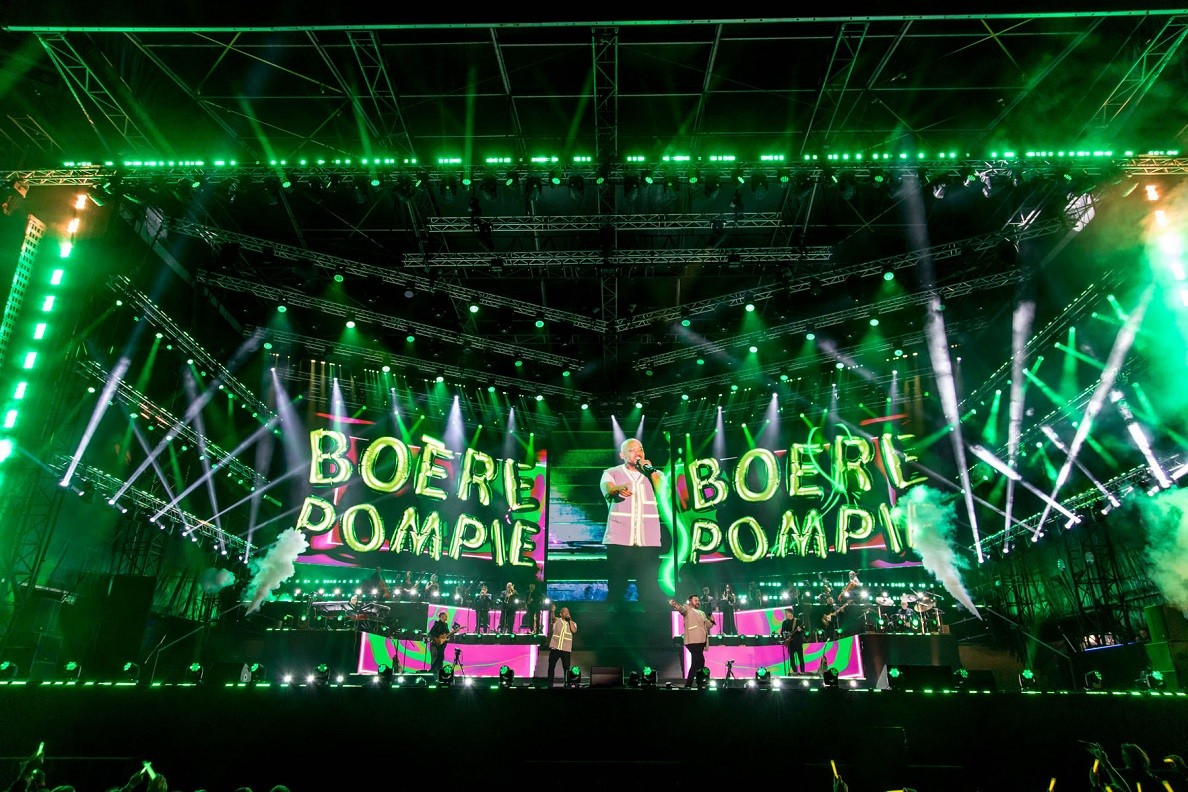
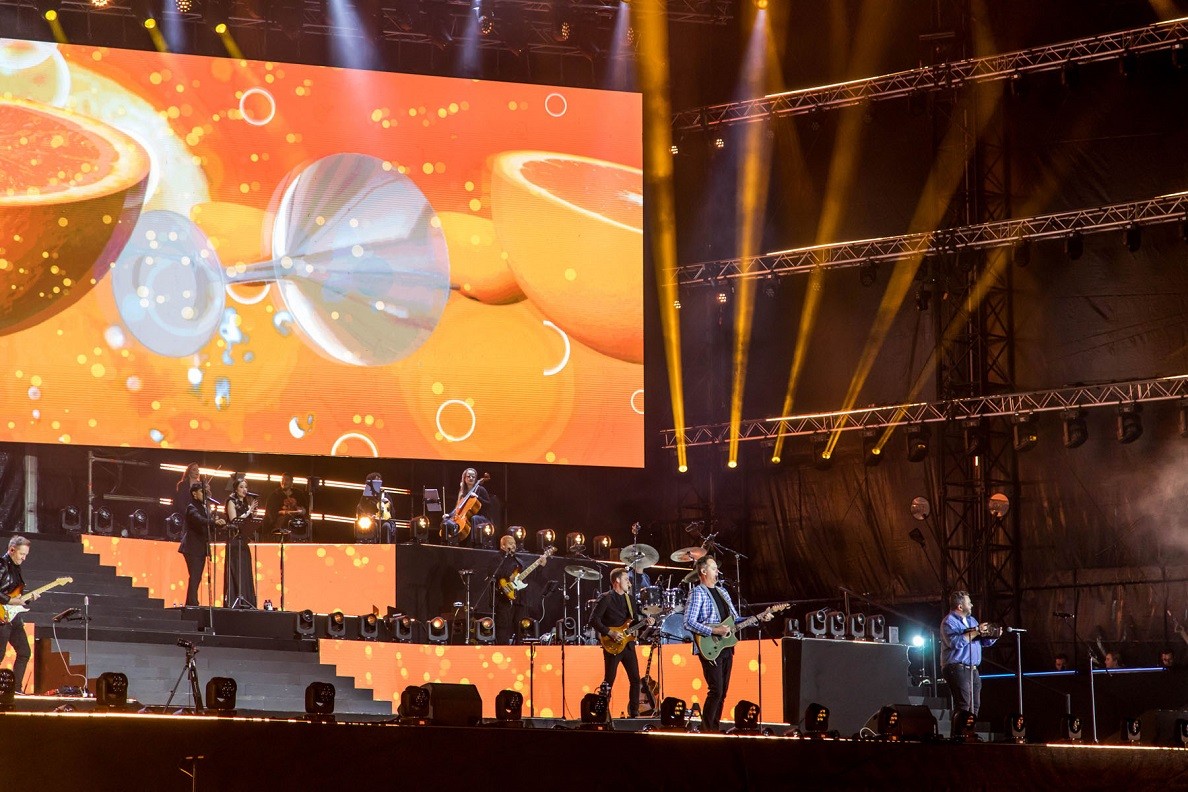
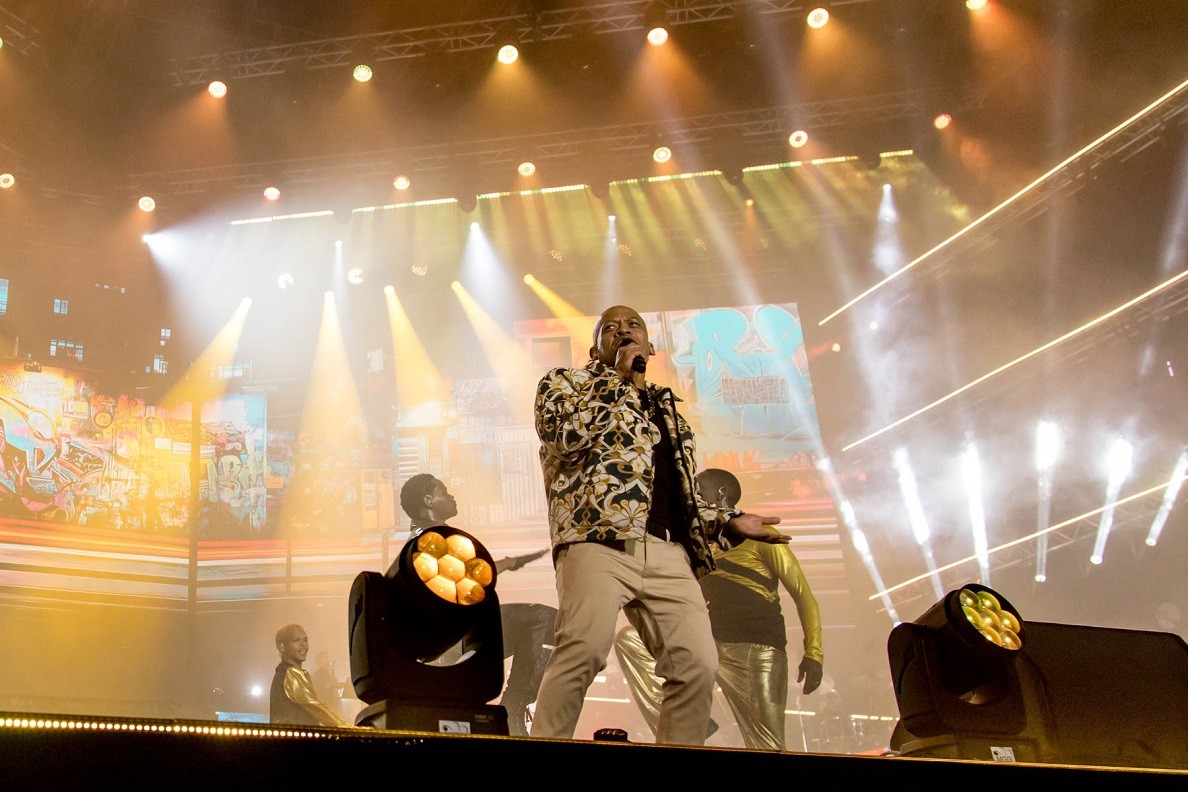
A special “Afrikaans is 100 Jaar Groot” (Afrikaans celebrates 100 Years) centenary concert was staged at the DHL Stadium in Green Point, Cape Town, South Africa, a location with views of Table Mountain in the background. Produced by Coleske Artists and featuring over thirty collaborations by leading Afrikaans artists, it marked 100 years of the Afrikaans language being officially recognised. The event sold out in a single morning.
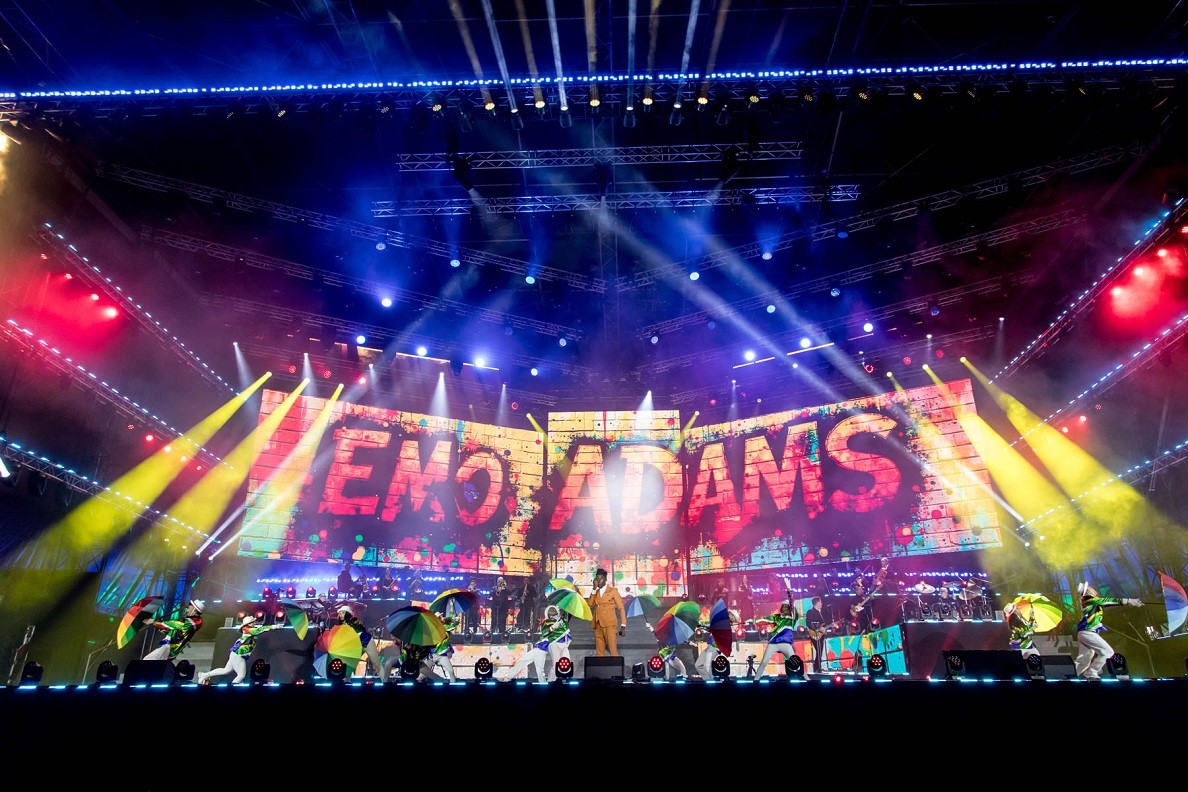
The lighting design for the occasion was imagined by Joshua Cutts and Andre Siebrits from Visual Frontier, featuring over 450 Robe moving lights. All lighting, video, audio and rigging equipment for the event was supplied by South African rental and production company MGG, project managed for them by Günther Müller. Earlier in the year, MGG had made a large investment in Robe iForte and SVB1 fixtures to add to their already extensive Robe rental inventory, which was utilised in the show.
The Robe fixture counts comprised four iForte LTXs running on RoboSpot remote follow systems, 24 x iFortes, 22 x Tetra2s, 16 x Spiider LED wash beams running in Mode 4, 26 x Esprite Profiles, 38 x LEDWash 600s, 24 x BMFL Blades, 24 x MegaPointes, 47 x LEDBeam 350s, 24 x Pointes, another eight Spiiders running in Mode 2, 36 x Spikies, 48 x SVB1s, 98 x LEDBeam 150s and eight BMFL WashBeams. These were a vital element on a rig of over 1000 lighting fixtures.
With Cutts and Siebrits being steady Robe users, “Robe was a natural choice for us”, comments Cutts. They dipped into MGG’s extensive stock and designed lighting that was flown underneath a massive StageCo roof system and 25-metre-wide stage below. This was supplied by Gearhouse South Africa (GHSA) together with other structures. GHSA also supplied elements of the L-Acoustics PA together with MGG.
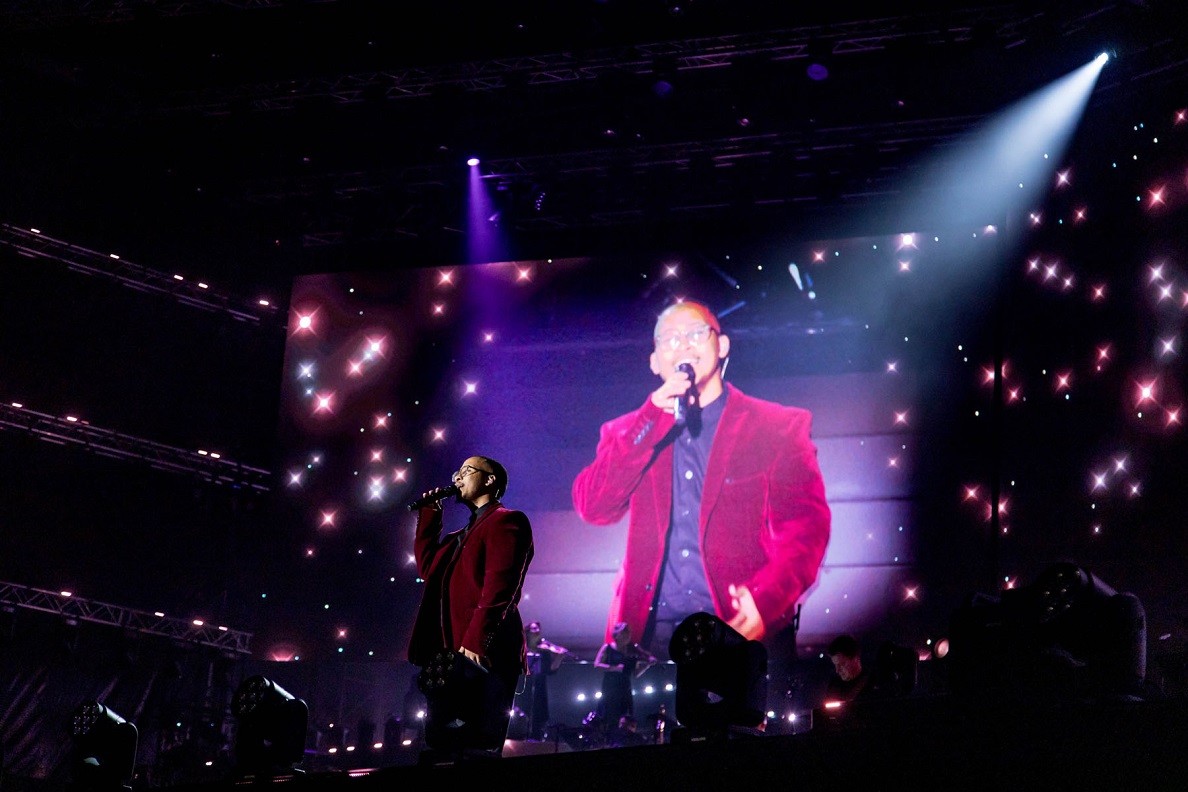
The stage design and LED screen layout was created by Müller, featuring three large LED surfaces upstage, a central 9 x 16 screen plus two slightly angled supporting 16 x 9 screens on either side, multi-layered LED riser fronts for the house band/orchestra and two portrait-oriented IMAG screens.
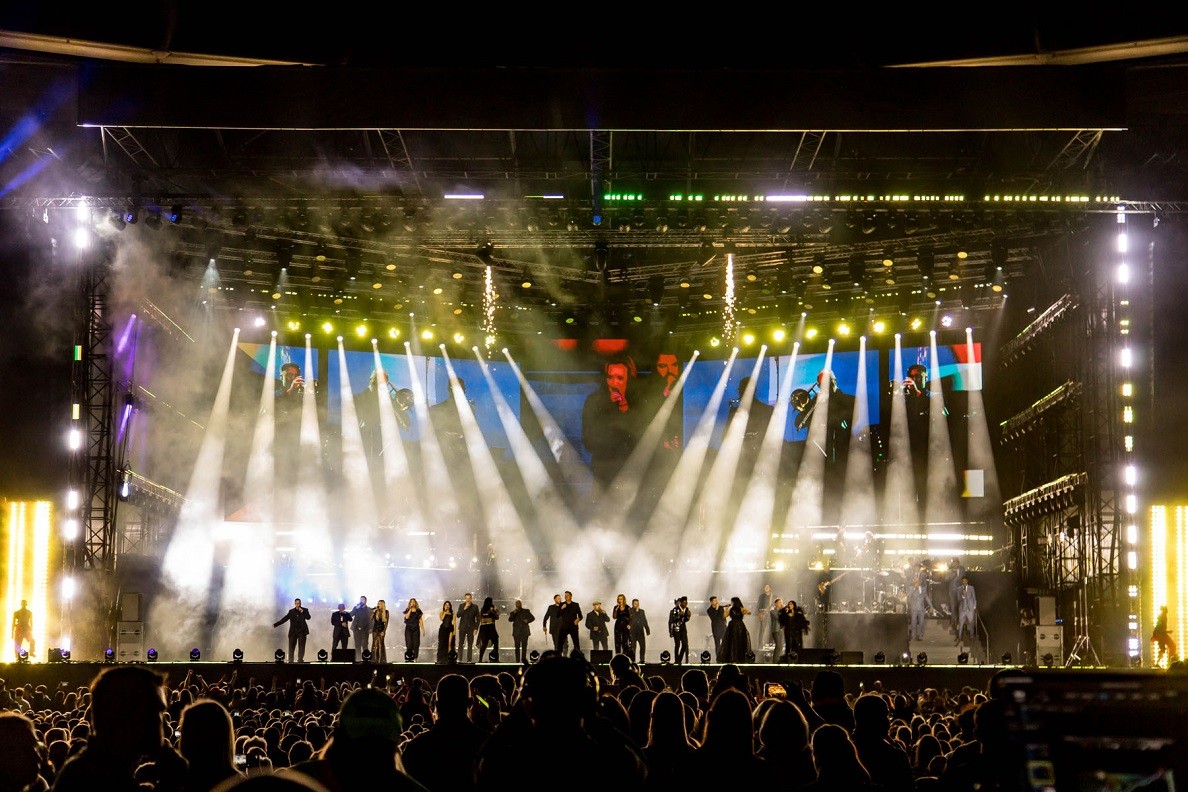
The 24 Robe iFortes were deployed on the four front-of-house delay tower positions, six fixtures per tower. The four iForte LTX FSs complete with integral camera running on the RoboSpot system were also rigged here, one per tower. This configuration provided precise remote follow-spot control and front light over some seriously long distances.
It ensured consistent key lighting across the entire venue, a crucial requirement for a production of this scale, which featured a 22-piece house band, up to thirty guest performers onstage at various times, plus numerous MCs, dancers, and TV personalities who were appearing throughout the show. Each delay tower also incorporated a selection of eye-candy and effects fixtures, extending the show’s visual energy into the audience and accentuating the strong sense of depth between the main stage and the rear of the venue.
The Esprites were spread out along the most upstage of four sets of trusses shaped into chevrons, each made up of a stage right and a stage left stick of truss. Five Esprites were positioned upstage centre on their own truss, also holed into the RoboSpot system and used for backlight on individual artists. A row of Spiider LED wash beams alternated with these upstage Esprites, and the three Esprites were on their own front truss for high-angle key lighting and specials. Esprite has become a standard back lighting profile for Cutts and Siebrits. The iFortes and Esprites were the show’s workhorse fixtures. MGG was the first rental company in South Africa to invest in the iFortes and iForte LTX systems, delivered by Robe’s South African distributor DWR.
Half of the BMFLs were on the next downstage set of trusses - alternated with LEDWash 600s - with the others on the most downstage chevron, also with LEDWash 600s spaced in between. Another array of LEDWash 600s were positioned on the second most downstage chevron together with some moving spot lights, so there was a comprehensive general stage wash made up of Spiiders and LEDWash 600s traversing all four chevrons.
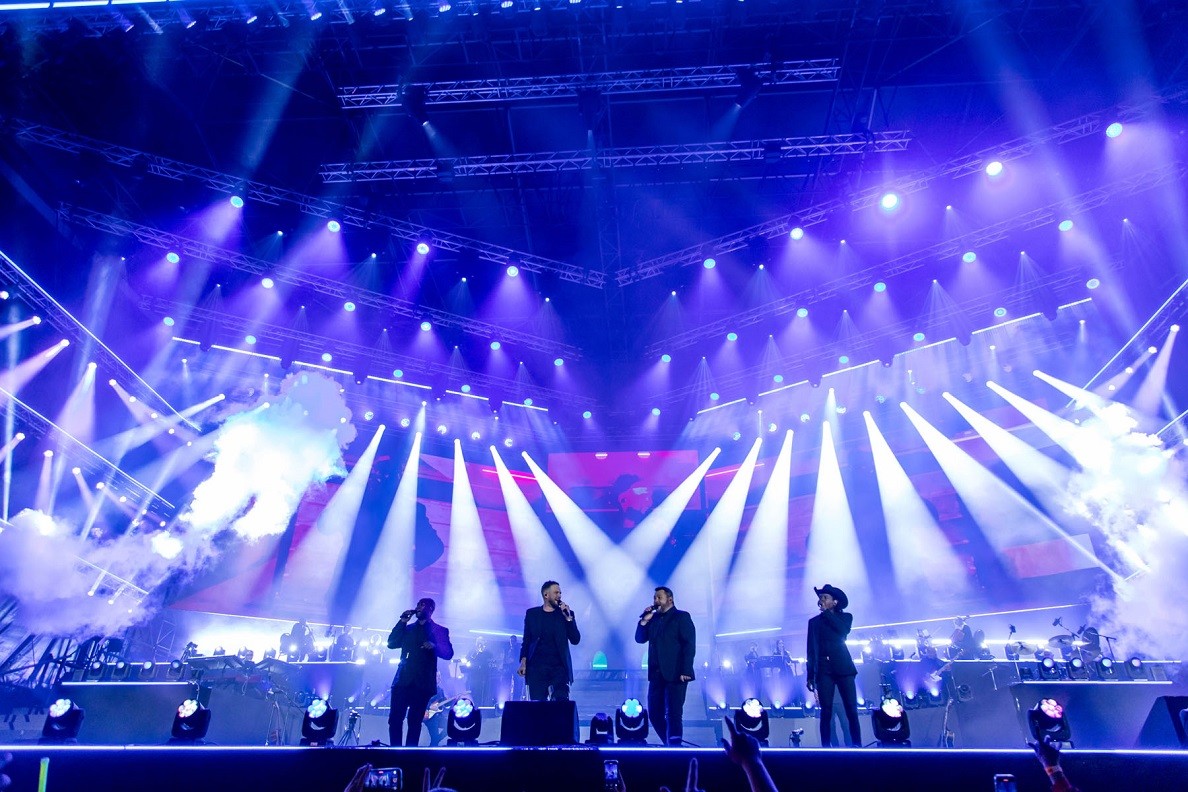
The 24 MegaPointes were on a 50-metre continuous ‘header’ truss flown from the downstage section of the roof and extending along the top of both PA wing structures. They were used for blasting out into the audience and pulling them into the onstage action, and alternated with forty LEDBeam 350s supporting them. These formed a certain number of beams that danced up, down and around the audience.
On the floor, the 48 SVB1s were deployed around the risers on all levels, together with some of the LEDBeam 150s and the Spikies. The SVB1s were used extensively as beams or for twinkling kinetic effects, strobe moments, generic eye-candy and back-of-camera fillers. A wide line of LEDBeam 150s graced the front of the stage, used as dynamic footlights and boosting the stage wash from a lower angle when needed.
Cutts and Siebrits did extensive pre-vizzing to establish the basic show building blocks and as much detail as possible, which was vital due to the exceptionally short period they knew would be available on site. “Every song had its own narrative and was effectively a story-within-a-story”, says Cutts, and they needed to go big, small, intermediate and everything in between to communicate all these dynamics and keep the 47,000-capacity audience enthralled.
Ahead of the event, they also spent time with the creative directors, including Hayley Bennett-Freidin, to ensure the lighting was stylistically synced with the various choreography segments and costumes. The MGG lighting crew was chiefed by Pierre van Wyk, who worked with eight technicians at the stadium, together with a 6-person Springbok (rugby) style “Bomb Squad” who came in during the last two days to blitz the final stages and get the rig ready for handover.
(Photos: Kief Kreativ)

SCHLAGZEILEN
news archiv
suche
© 1999 - 2026 Entertainment Technology Press Limited News Stories