



Aktuelle News & Schlagzeilen
L-Acoustics DJ makes its European festival debut at Nameless
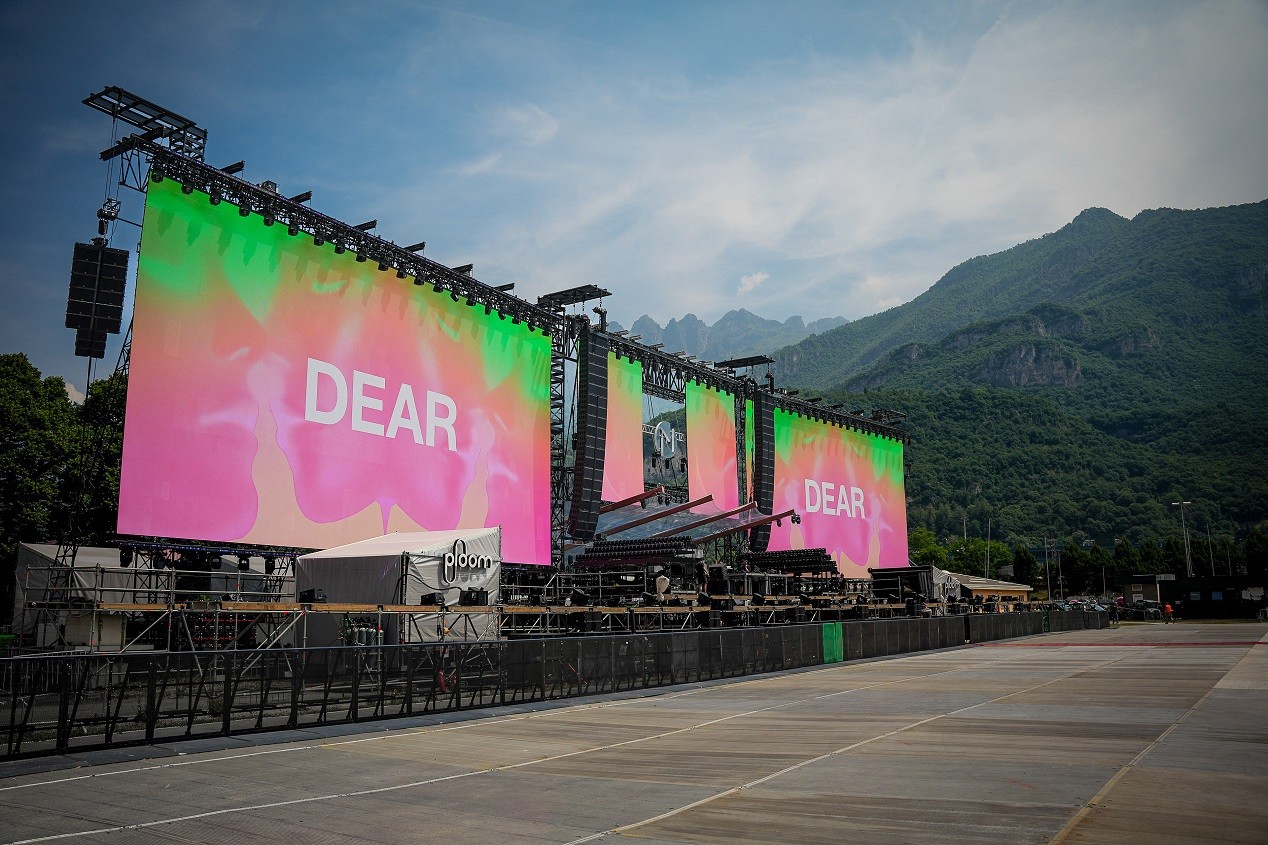
Nameless Festival began in 2013 as a party thrown by a group of friends at the Bione sports centre in Lecco, on a single stage. Thirteen years and three home venues later, it returned to the same ground as one of Italy’s defining electronic music events, featuring four stages, more than 100 artists and 90,000 festival-goers across three days from May 30 to June 1, 2026.
With Calvin Harris, John Summit and Fisher headlining, the 2026 edition carried two firsts for the festival’s audio. The Red Bull Energy Zone became the first festival stage in Europe with an L-Acoustics DJ spatial sound system, and every stage on site was powered by L-Acoustics.
The decision to unify came from Nameless production director Angelo Loizzi. The festival supplies its own front of house and system engineers, so the specification came from the people who would operate it. Delivering that brief fell to two partners with distinct roles. L-Acoustics Certified Provider Milano Show Rent supplied the systems and crewed all five stages. Technical and lighting designer Nico Berna of Black Box, also an L-Acoustics partner, handled the stage and coverage design with Nameless production’s Jacopo Naso.
Both companies had already worked with the Nameless team at smaller festivals earlier in the year. “At Nameless 2026, our partnership with the team scaled up”, says Amaury Froiio, project manager and owner at Milano Show Rent. “We were delighted to take on the full, five-stage AVL production entirely in-house.”
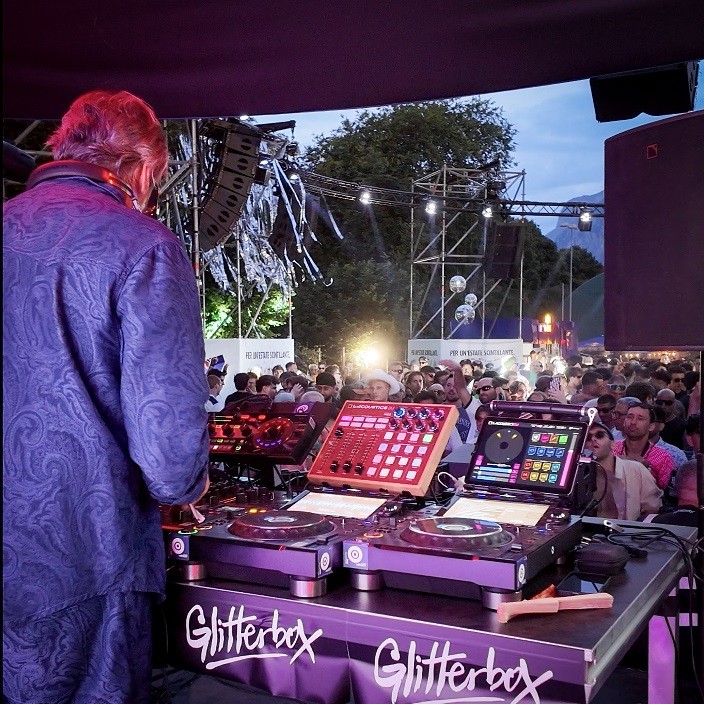
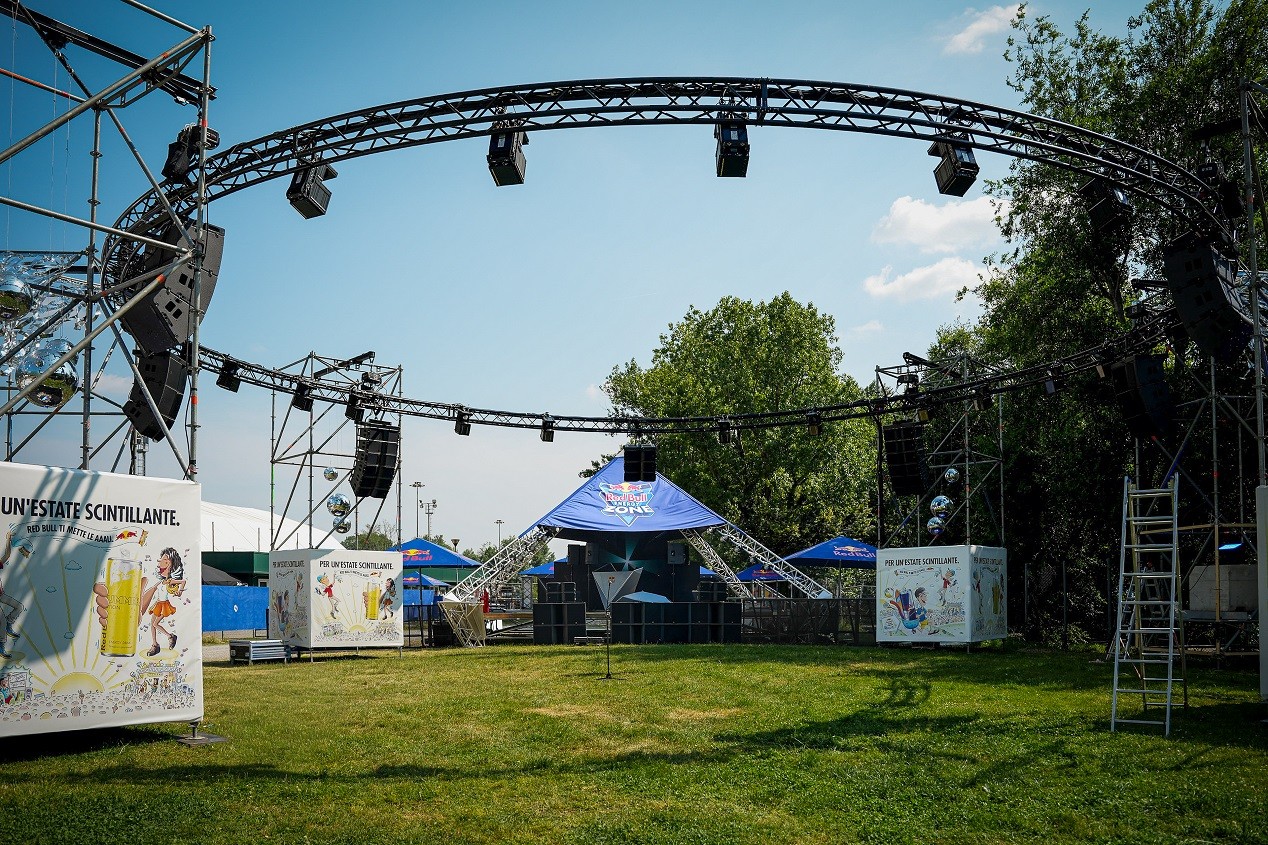
The Red Bull Energy Zone, headlined by Defected, Glitterbox and Crunch, had been conceived as an in-the-round dance floor rather than a conventional end-on stage, and Loizzi saw an opening in that geometry. “Our audience comes for house and club music, and that music is built to be felt from every direction”, he says. “Once we decided the Red Bull Energy Zone would be in the round, a stereo system no longer made sense for it.”
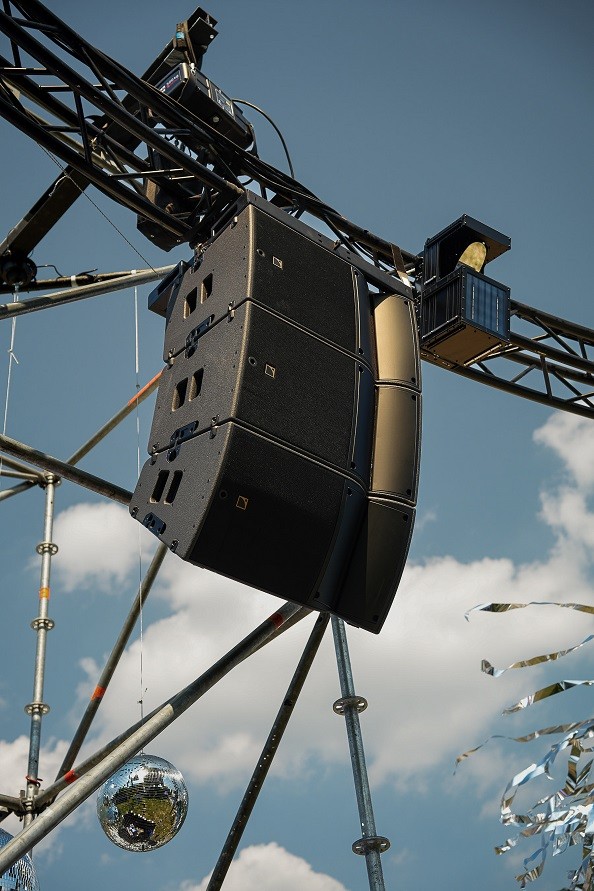
The floor and its ring truss came from the production team’s own design, and the audio layout followed it. Working to Berna’s stage design, Milano Show Rent and L-Acoustics sound engineer Rafael Pereira developed a system for the 16 m diameter circular truss, with six towers carrying both the audio and the lighting rigs and wrapping the floor in a fully spatialised listening experience rather than pushing sound from one direction. “The floor and the ring were already the plan when we came in”, says Froiio. “Our job, with Rafael, was to make that shape sound the way it looked. That is the space we put L-Acoustics DJ into.”
Bione was familiar ground, but not at this scale, so the site had to be surveyed as if it were new. A run of buildings directly behind the main stage had to be kept out of the coverage pattern, which was one of the reasons the main hangs used K1 over K1-SB, with subs in cardioid configuration.
With no usable position for delay towers anywhere in the main field, the full depth of the audience area had to be covered from the stage itself. The Nameless Tent presented the opposite problem: it faced the main stage across the site, so spill had to be controlled in both directions, while the tent structure’s load capacity ruled out heavy flown hangs.
The audio crew worked inside a 10-day build shared with structure contractor Stageco, installing all five systems over two days and taking them out in a single night. Soundvision underpinned that schedule. The design flow began in vector drawings and SketchUp, which Berna’s team passed to System Engineer Luigi Vargiolo, who built the Soundvision files for three stages. Those files became the shared reference for the whole audio crew, and for visiting artists’ engineers.
“We had eight people on the audio crew this year, and every one of them is a good Soundvision user”, says Berna. “We share the file, we meet briefly before load-in, and everybody can see their own part of the project. It speeds up load-in and load-out, and it is where we start when we fine-tune for wind and weather on site.”
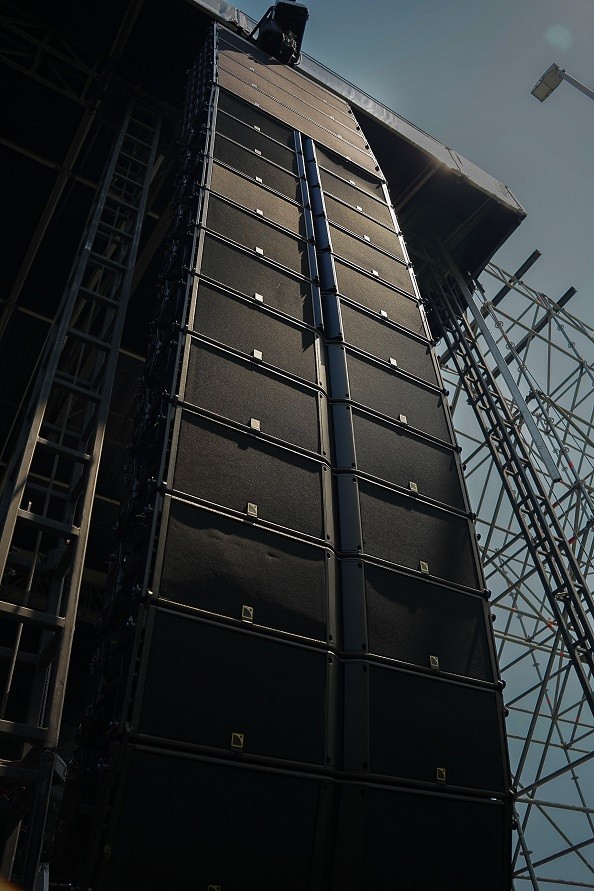
Each stage was designed around its own footprint, load limits and programme. The main, Ploom Stage, home to the three headliners, was built on twelve K1 and 2 K2 down per side below six K1-SB which extended the line to better control low frequency over the audience. Additional KS28 subwoofers - forty-eight in all, in cardioid configuration - were groundstacked across the stage front to add bass punch.
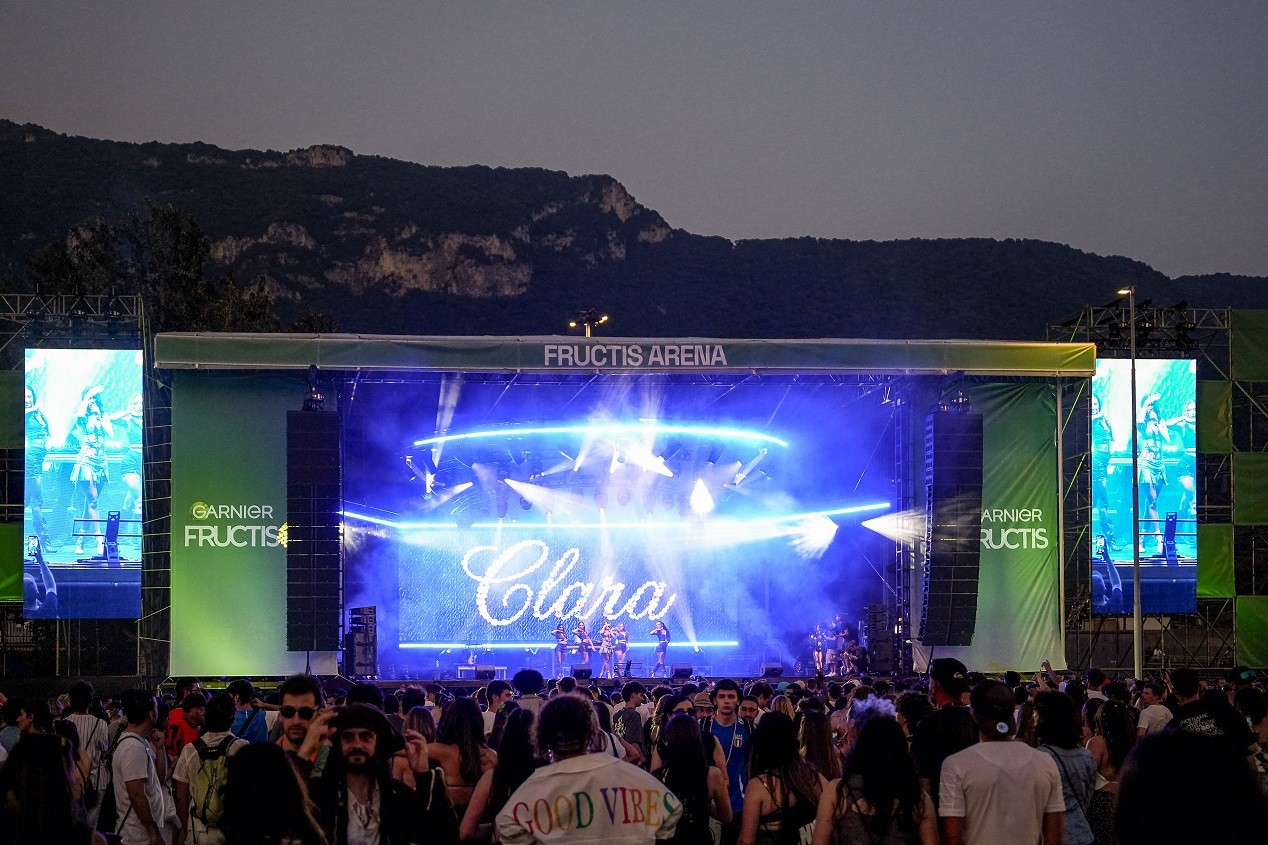
The Live stage carried hangs of four K1-SB with twelve K2 each side, and sixteen groundstacked KS28 subs. The Garnier Fructis Arena, the rap, urban and pop stage, boasted ten K2 per side, with sixteen cardioid-configured, groundstacked KS28. The Red Bull Energy Zone ran Kara II and A15 across the seven arrays in the LA DJ set up, on the 16 m ring, with eight KS28 on the low end, while the Heineken Stage, an open platform where the public could book slots on the consoles, used a scaled-down Kara II and A15 rig.
Kara II and SB18 handled monitoring on every stage, and the whole site ran on LA12X amplified controllers. In total, more than eighty K2 and over 100 KS28 joined the twenty-four K1 across the five stages.
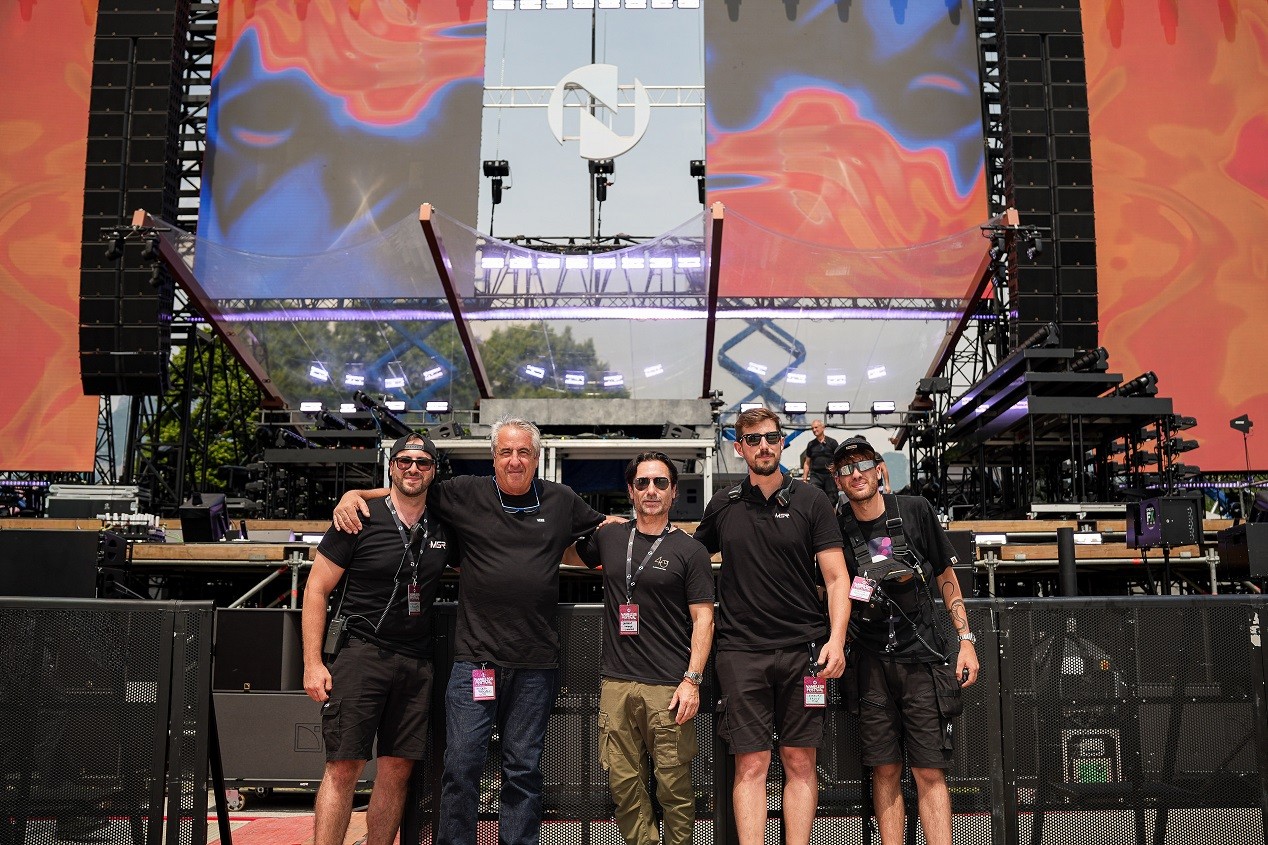
Pictured (left to right): William Procopio (Milano Show Rent), Nicola Procopio (Milano Show Rent), Laurent Vaissié (L-Acoustics), Amaury Froiio (Milano Show Rent), Mattia Procopio (Milano Show Rent). (Photos: L-Acoustics)
SCHLAGZEILEN
news archiv
suche
© 1999 - 2026 Entertainment Technology Press Limited News Stories