





Aktuelle News & Schlagzeilen
Nucleus and Russell Sage Studio build Wow!house 2026 around L-Acoustics Hyriss
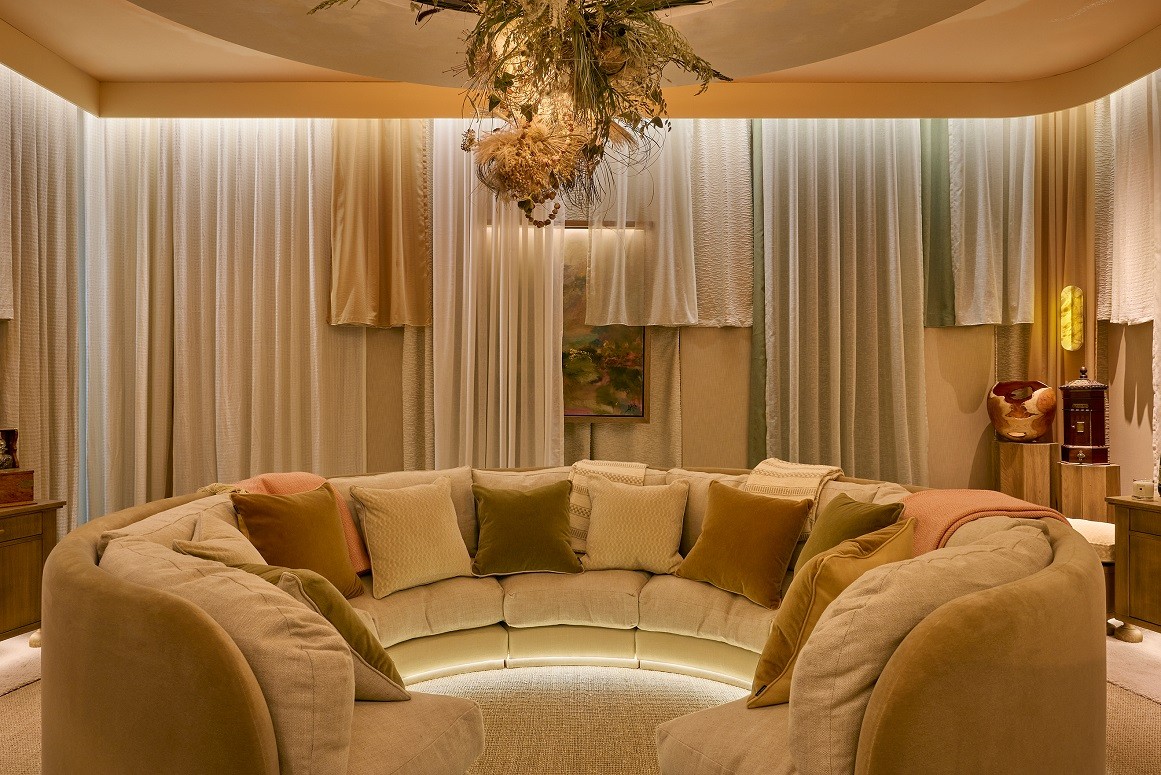
Wow!house, the annual showhouse staged at Design Centre Chelsea Harbour, has opened its fifth edition with 22 rooms by an invited roster of architects and interior designers. The culmination of the visit is The Nucleus Immersive Room by Russell Sage Studio. The Momentarium is built around an L-Acoustics Hyriss spatial audio system - the first time Hyriss has been specified for a designer showhouse, and the technology is the structural premise of this space.
Wow!house is open to the public from June 2 to July 2, 2026, with twice-daily guided tours included in the ticket price. The event draws an audience of design enthusiasts and the international design press, as well as architects, interior designers, hoteliers, yacht designers, and property developers who specify residential and hospitality interiors.
Nucleus, the UK residential AV integrator behind the project, returned to Wow!house after presenting a media room at the 2025 edition. This year, the team set out to design a room in which audio would shape every element of the experience: narrative, atmosphere, and visitor interaction alike.
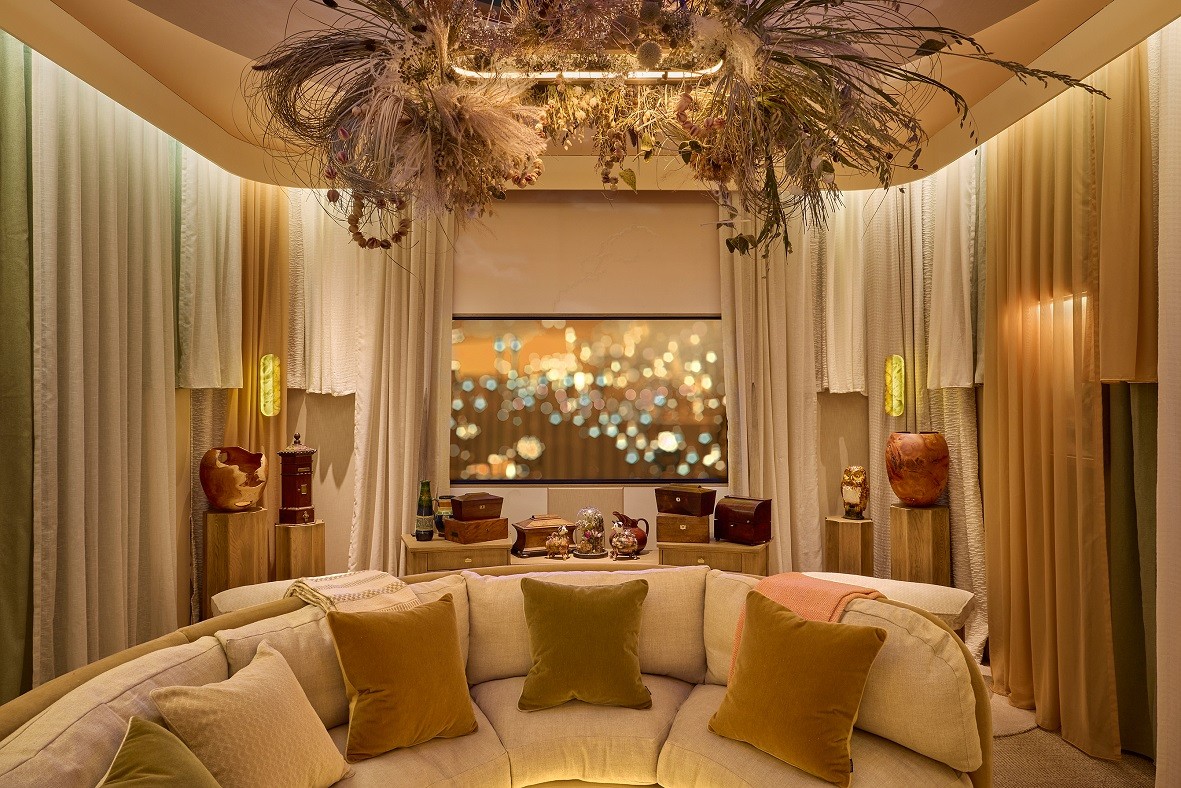
Russell Sage Studio partnered with Nucleus to develop the concept around the idea of memory: a circular, cocooning interior in which visitors lift objects like letters, photographs, and small heirlooms from a set of bespoke drawers and chests, and each object cues a corresponding sound and atmosphere. A fragment of music. An ambient texture. A shift in light. Two pieces of music were written for the room by Krishna Jhaveri and Sanaya Ardeshir, composers working in L-ISA Studio.
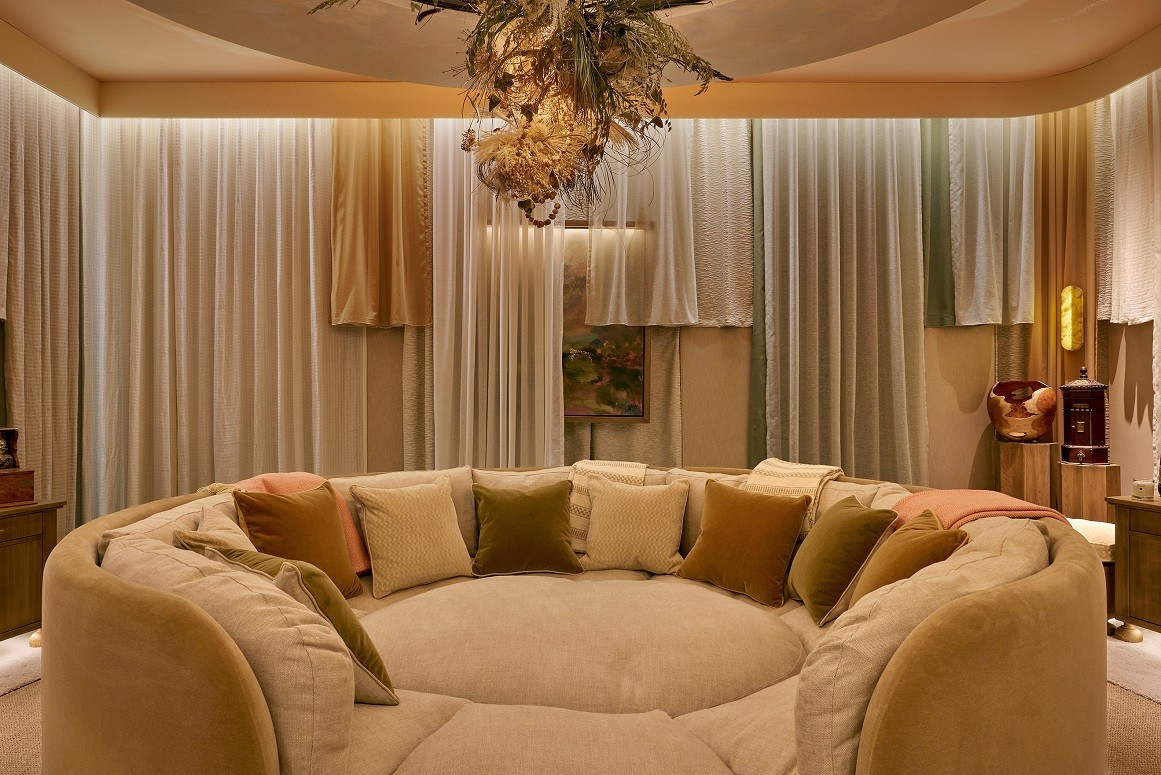
The room sits at the close of the visitor journey through Wow!house. Seating is a custom curved banquette under a sculpted plaster ceiling; fabrics are layered in soft hues; lighting, by John Cullen Lighting, is built into the architecture; scent is provided by Jo Malone London. Audio, video, lighting, and shading are orchestrated as a single layer through Crestron, so that when a drawer is opened it changes both the soundtrack and the room’s entire atmosphere.
“We wanted to push our media room further”, says Durgesh Sinh, Founding Director of Nucleus. “Our aim was to show what happens when technology is considered from the start, as part of the architecture, the interior, the lighting, and the acoustics, all at once. The room had to use sound to do something we hadn’t done before in a designed space.”
A conventional 5.1 or 7.1 surround system was incompatible with the design brief. Channel-based audio ties sound to fixed speaker positions; the Momentarium needed sounds that move with the listener as the room’s state changes. Nucleus, having previously experienced Hyriss (Hyperreal Immersive Sound Space) at the L-Acoustics showroom in Highgate, specified it for the project.
Hyriss’s adaptability allowed the Momentarium to function as a memory-trigger environment in the first place: the same loudspeakers and processing that reproduce a film soundtrack can, a minute later, place a fragment of music behind the listener’s shoulder. “We chose Hyriss because we wanted the room to go beyond conventional surround sound or a standard home cinema format”, says Sinh. “The idea was to create a room where sound could become part of the storytelling.”
Russell Sage Studio’s interior had to remain visually unbroken. Acoustically transparent fabric, specified with Nucleus, conceals the loudspeakers. Sony displays provide visual content where required. Every system in the room is controlled and orchestrated through Crestron. “What inspires me about Nucleus is their ability to translate complex technology into something elegant and intuitive”, says Russell Sage. “They treat sound, light, and control as architectural tools, not add-ons. That mindset allows us to create spaces where technology enhances atmosphere rather than interrupting it.”
The Momentarium is built around seventeen X4i coaxial loudspeakers and supported by twelve SB6i subwoofers. System drive is handled by two LA1.16i amplified controllers, with a single LC16D and two LS10 network switches managing signal distribution throughout the room. At the heart of the processing chain sits an L-ISA Processor II alongside a P1 processor for Ambiance, delivering the object-based audio spatialisation that defines the space. The L-ISA Processor II runs the Anima engine to adapt the room’s acoustic behaviour to each scene.
“Sound had to cocoon the room, create movement, support the visual content, and help transform the overall atmosphere”, Sinh concludes. “Hyriss is what makes the room different. It allows the Momentarium to become more than a beautiful space with AV integrated. It’s a room that can shift, tell stories and create a lasting emotional response. That was always the core ambition of the project.”
(Photos: James McDonald)
SCHLAGZEILEN
news archiv
suche
© 1999 - 2026 Entertainment Technology Press Limited News Stories