




Aktuelle News & Schlagzeilen
Christopher Pratt uses Ayrton Stradale to light “Dear Evan Hansen” in Portsmouth
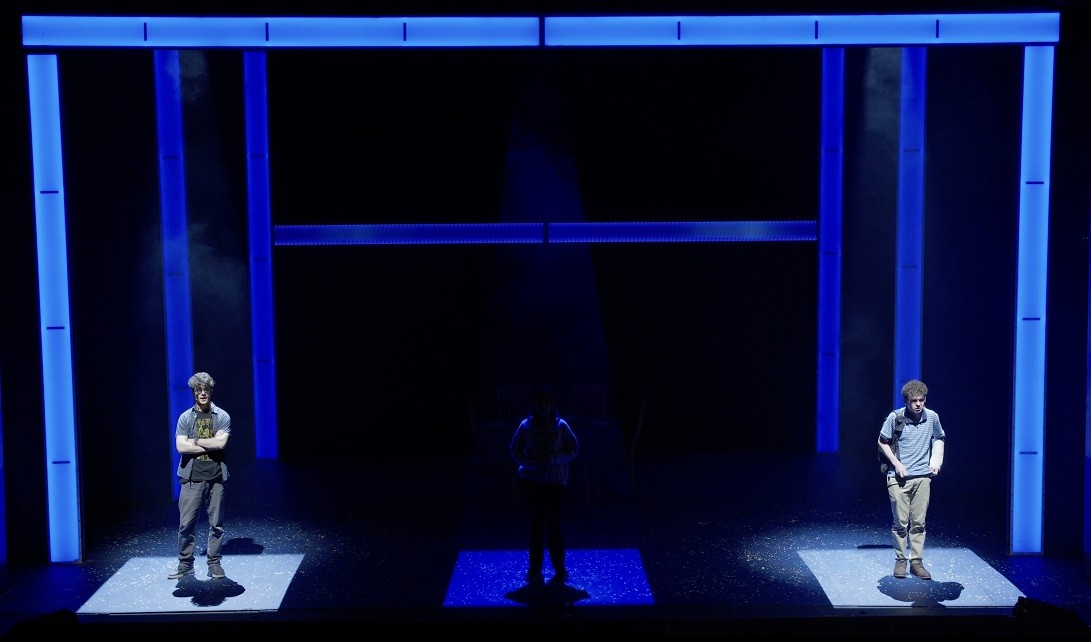
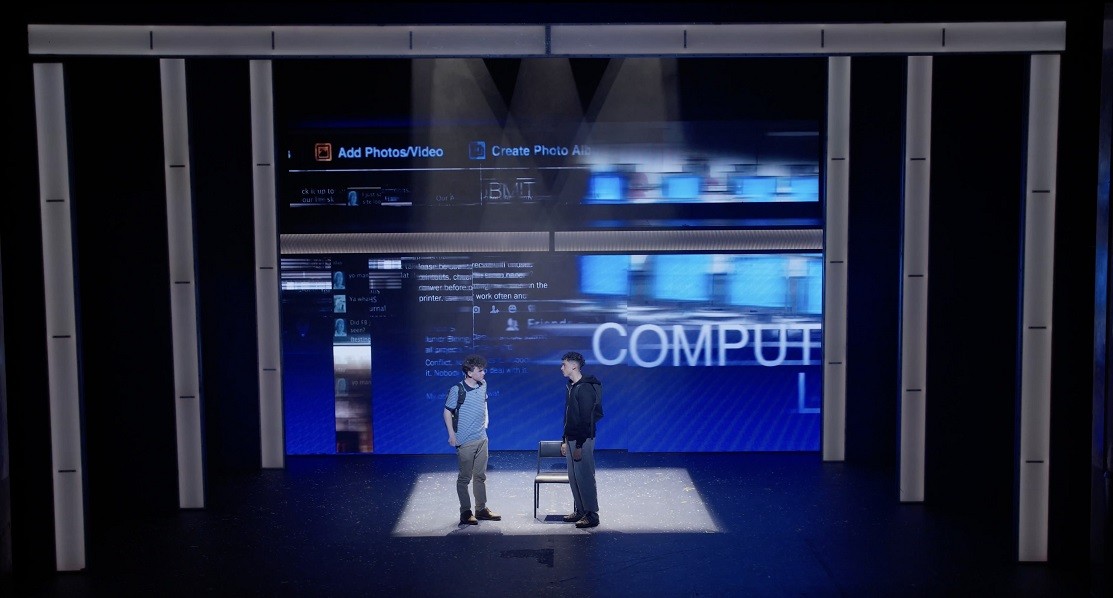
The recent amateur production of “Dear Evan Hansen” performed by CCADS Theatre in The King’s Theatre, Portsmouth, saw some highly original uses of Ayrton Stradale fixtures in a design by lighting designer Christopher Pratt (CMP Lighting Design). Pratt, who has a long-established working relationship with CCADS, incorporated fifteen Stradales into his design, utilising the shutter sets to carve out precise areas of action and track the actors across the stage.
“Our director, John-Paul McCrohon, wanted to set the mood as an overarching sense of isolation”, he says. “The idea was to light the minimum amount of space needed for each scene - which is where the concept of the hard line shuttering came in. I therefore insisted all the movers overhead should have shutter blades, and, being familiar with Ayrton Mistral spots and Diablo profiles, was keen to explore the new Stradale.”
Pratt approached the show’s lighting supplier, ITP Lighting Ltd, with his request, who increased its investment in more Stradale units for their hire stock. “This allowed me to have three bars of five Stradale profiles overhead, which worked perfectly in the 9.5 m x 6.5 m x 6 m performance space”, reports Pratt.
“The amount of hanging set was minimal which left me with lots of freedom to hang lighting bars and rig the Stradales where I wanted”, he furthers. “It gave me a nice balance between keeping the movers hidden and covering the full expanse of the stage. I had complete freedom to work with different angles, create different looks, and get as much from the Stradale as possible.”
With only two days of technical rehearsal - and with amateur actors only available in the evening - Pratt had to work fast. “It was a brand new set, so we were going in blind”, he says. “On Day 1 we set out the boundaries of what each scene needed, and because of the lack of time, I used only one Stradale to light each scene. This gave me the square/rectangular space I needed to ensure we covered every location needed as we blocked through the scenes.”
“On Day 2, I filled in the details using the rest of the Stradale fixtures, sometimes using as many as six for each square”, he continues. “I was able to make fine adjustments with the actors in place, adjusting angles and perfecting timings, smoothing and blending the overlaps and pauses, achieving smooth graduations.” For the more complex effects, such as creating a moving corridor that would open in front and close behind an actor, Pratt says it was “rather like tracking the actor with shutter blades.”
“I set up a preset for the corridor of light I wanted”, he details. “Then I brought a shutter in to cover the entire beam path. Then recorded each step taking out that shutter blade as a cue and used follow-ons to have them blend into one another. I then repeated it the other way if I was closing the corridor.”
Pratt says that Stradale’s rotating frame assembly made “a big difference” in the speed and ability to achieve the precise angles he required: “Most of it was at 90° where not much adjustment to the angle of the shutter blades was required. But in several scenes the angle was offset, so I would bring in the shutter blades, rotate the assembly +/-90° and adjust the shutter blades until I could cover all the awkward angles to achieve a perfect square.”
Working alongside Pratt and McCrohon were Roxanne Wootton (Musical Director), Amanda Knight (Stage Manager), and Lauren Smith (Deputy Stage Manager), as well as follow spot operators Holly Sandford and Paul Moroney. The sound design was by Aaron Hayes, and the set by Scenic Projects.
(Photos: Tony Neil)
SCHLAGZEILEN
news archiv
suche
© 1999 - 2026 Entertainment Technology Press Limited News Stories